
Written by
Jelica
Published on
April 22, 2026
Read time
7
min
Category
Design
Learn how to evaluate landscape contractors near you — and why the best firms show you a 3D render of your project before construction begins.
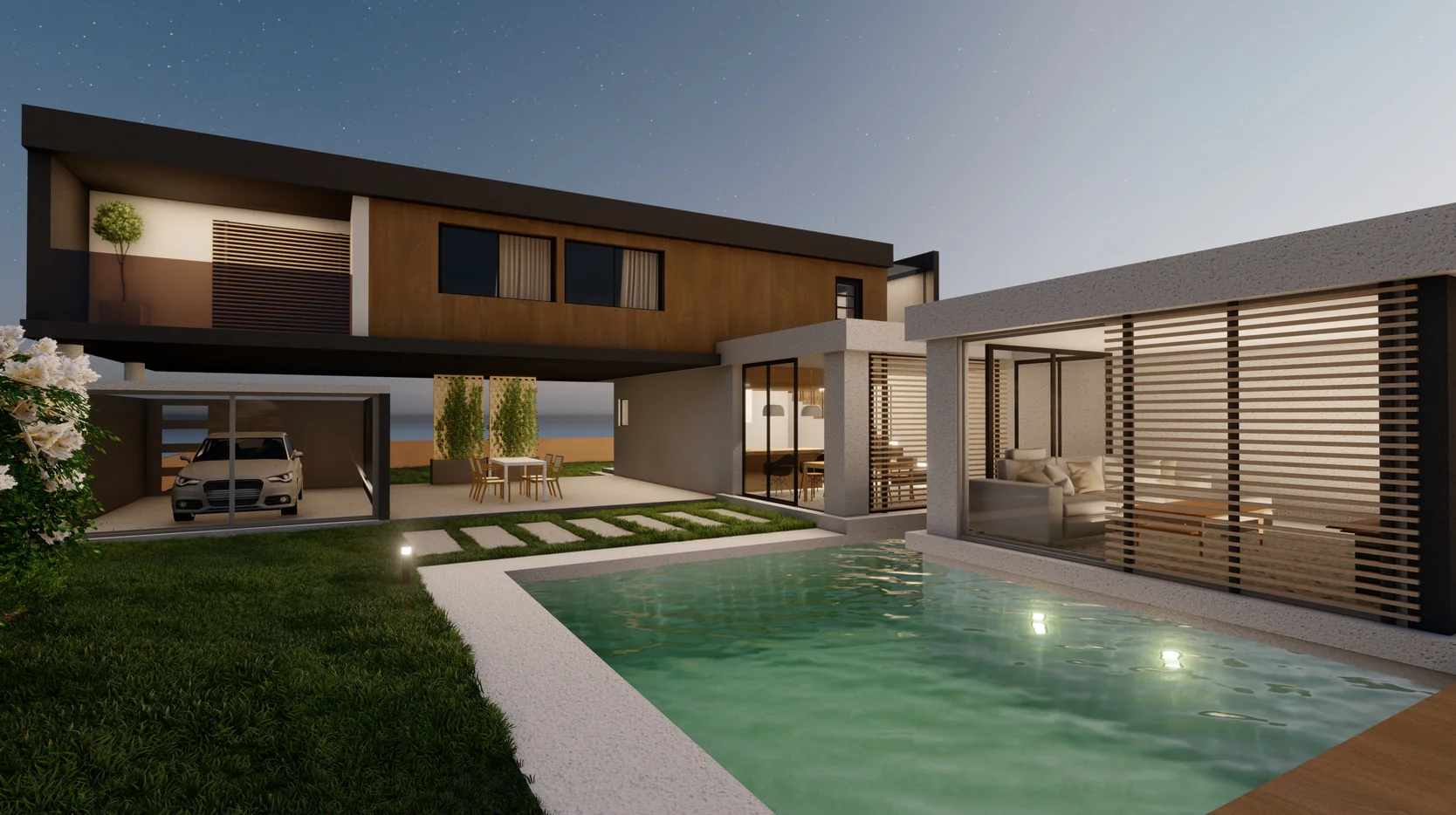
Hiring a landscape company is not a small decision. Whether you are planning a full backyard transformation, a new pool surround, or a complete hardscape installation, the contractor you choose determines whether the project ends exactly as you pictured — or becomes a source of regret. The problem most homeowners face when searching for the best landscape company near them is not a lack of options. It is knowing how to separate serious firms from those who will underdeliver.
This article gives you a clear, practical framework for evaluating landscape contractors — and explains why the best firms today show you the finished result before a single shovel breaks ground.
Quick Summary
The best landscape company near you is one that combines verified local experience, a clear process, and the ability to show you a photorealistic preview of your finished project. Contractors who use 3D renders before construction starts remove guesswork, protect your budget, and close projects with fewer surprises. Use the criteria in this article to evaluate any firm before signing.
A good landscape company shows up on time, does competent work, and delivers a finished project that meets basic expectations. A great one does all of that — and removes your uncertainty before construction begins.
The difference is rarely about price. It comes down to process, communication, and the tools a contractor uses to manage your expectations from the first meeting. Any firm can describe what they plan to build. The ones worth hiring can show you exactly what it will look like — before you commit to the budget.
When evaluating landscape companies in your area, look for contractors who present project visualizations as a standard part of their process, not as an afterthought. This signals that they have invested in their own professionalism and take client communication seriously.
Start by assessing five things: their portfolio, their process, their communication style, their references, and whether they can visualize your specific project.
Portfolio depth matters more than volume. A contractor with 10 well-documented projects — complete with before-and-after photography — tells you more than one with 50 blurry phone photos. Look for projects that are similar in scope and budget to yours.
Process transparency is non-negotiable. Ask them how they handle scope changes, how revisions are tracked, and what happens if materials are delayed. A contractor who has no clear answers to these questions has likely not built a system for managing complex projects.
Communication speed reveals operational maturity. How quickly do they respond to your inquiry? How clearly do they explain things on the first call? A contractor who is difficult to reach before the contract is signed will not become easier once work begins.
References should be recent and specific. Ask for clients from the past 12–18 months, and ask those clients specifically about the post-installation experience — not just whether they liked the result.
Visualization capability separates leaders from the rest. The best landscape contractors near you are now partnering with professional design teams to offer 3D photorealistic renders as part of their standard pitch. If a contractor can show you an accurate, detailed render of your future outdoor space, that is not just impressive — it protects you financially.
Does the landscape company you are considering offer 3D renders? If yes, it is a meaningful signal. If no, it is worth asking why.
Contractors who present photorealistic 3D renders before construction have made a deliberate investment in their design process. They are not guessing — they are showing you the exact materials, layout, and spatial feel of your future project. That level of specificity only comes from a structured design workflow.
For you as a homeowner, this matters in three concrete ways. First, it eliminates the most common source of post-construction disappointment: the gap between what you imagined and what was built. Second, it allows you to make real decisions about materials and layout before any money is spent on labor. Third, it makes your approval process faster — because you are reacting to something you can see, not something described in a paragraph of text.
Contractors who work with integrated design partners — such as those in the Yelicca Design partner network — can offer 3D renders, 360° VR walkthroughs, and detailed visual documentation as part of their standard project package. These are not luxury add-ons. For any project above a modest scale, they are the baseline for informed decision-making.
Ask direct questions and pay attention to how confidently and specifically they answer. Vague answers reveal gaps in process; specific answers signal operational experience.
Here are the most useful questions to ask any landscape company near you:
The goal of these questions is not to catch the contractor off guard. It is to understand whether they have built a professional operation — or whether they are winging it on experience alone.
Online reviews tell part of the story. References tell the rest.
When reading Google or Houzz reviews for landscape companies in your area, filter for specificity. Reviews that describe specific outcomes — "they showed us a 3D render before starting and the final result matched exactly" — are more valuable than generic praise. Look for mentions of communication, timeline adherence, and how the contractor handled problems when they arose. Every project has something go slightly wrong. The measure of a contractor is how they manage it.
For references, ask the contractor to connect you with a client who had a project at a similar budget and scope to yours. When you speak with that client, ask two things beyond the standard: Did the contractor show you a visual preview of the project before construction? And would you hire them again for a larger project?
The second question is the real tell. A client who had a good experience will hire the same contractor again. One who had a technically acceptable but frustrating experience will not.
Contractors who invest in professional 3D visualization and integrated design support tend to generate stronger word-of-mouth precisely because the client experience is more transparent from start to finish. The render sets accurate expectations. The construction delivers against those expectations. The gap between the two — the primary source of post-project frustration — is closed before work begins.
Search for local contractors with verified reviews, a detailed portfolio, and a structured design process. The most reliable indicator of a serious firm is whether they offer 3D visualization of your project before construction — this shows they have invested in a professional workflow, not just execution.
At minimum: a portfolio of completed projects similar to yours, references from recent clients, and a clear proposal with scope and materials specified. The best landscape contractors will also offer a photorealistic 3D render of your specific project so you can see and approve the design before any work begins.
A growing number do. Contractors who partner with professional visualization studios — like those working with Yelicca Design — can present photorealistic 3D renders and 360° VR walkthroughs as a standard part of their design process. This is increasingly expected on mid-to-large residential and commercial landscape projects.
Design costs vary depending on project scope and the contractor's process. Some firms include design visualization in their project fee. Others charge separately. Contractors who work with integrated design partners can often offer this as part of their standard package — it is worth asking explicitly whether 3D design is included in the estimate.
A landscape designer creates the plan — layout, materials, plant selection, visual concept. A landscape contractor executes it. Some firms offer both in-house. Others partner with design studios to cover the design phase professionally while keeping their focus on skilled construction. The best outcomes typically come when both functions are handled by specialists who communicate clearly with each other.
Timelines vary significantly based on project scope, permitting requirements, material availability, and season. A well-run contractor will give you a realistic timeline in writing before work begins — and will have a documented process for communicating any changes. Firms that use project management platforms allow you to track progress directly rather than waiting for updates.
Finding the right landscape company near you is not about finding the cheapest option or the most reviews. It is about finding a contractor who can show you where you are going before you start — and deliver against that commitment once work begins.
The contractors who consistently win the projects homeowners are most excited about are the ones who have built a professional design process alongside their construction expertise. If the firm you are evaluating can show you a photorealistic render of your finished outdoor space, you are already in the right conversation. If they cannot, it is a reasonable question to ask why.
To see examples of what professional 3D landscape visualization looks like — and to understand how design partnerships work for contractors and homeowners — visit yelicca.com.
The fastest architectural design team, delivering creativity at the speed of innovation 🚀
.jpg)
.jpeg)