
Written by
Jelica
Published on
April 21, 2026
Read time
6
min
Category
Design
Landscape contractors who present 3D renders close more bids, reduce client hesitation, and charge more — without an in-house design team.
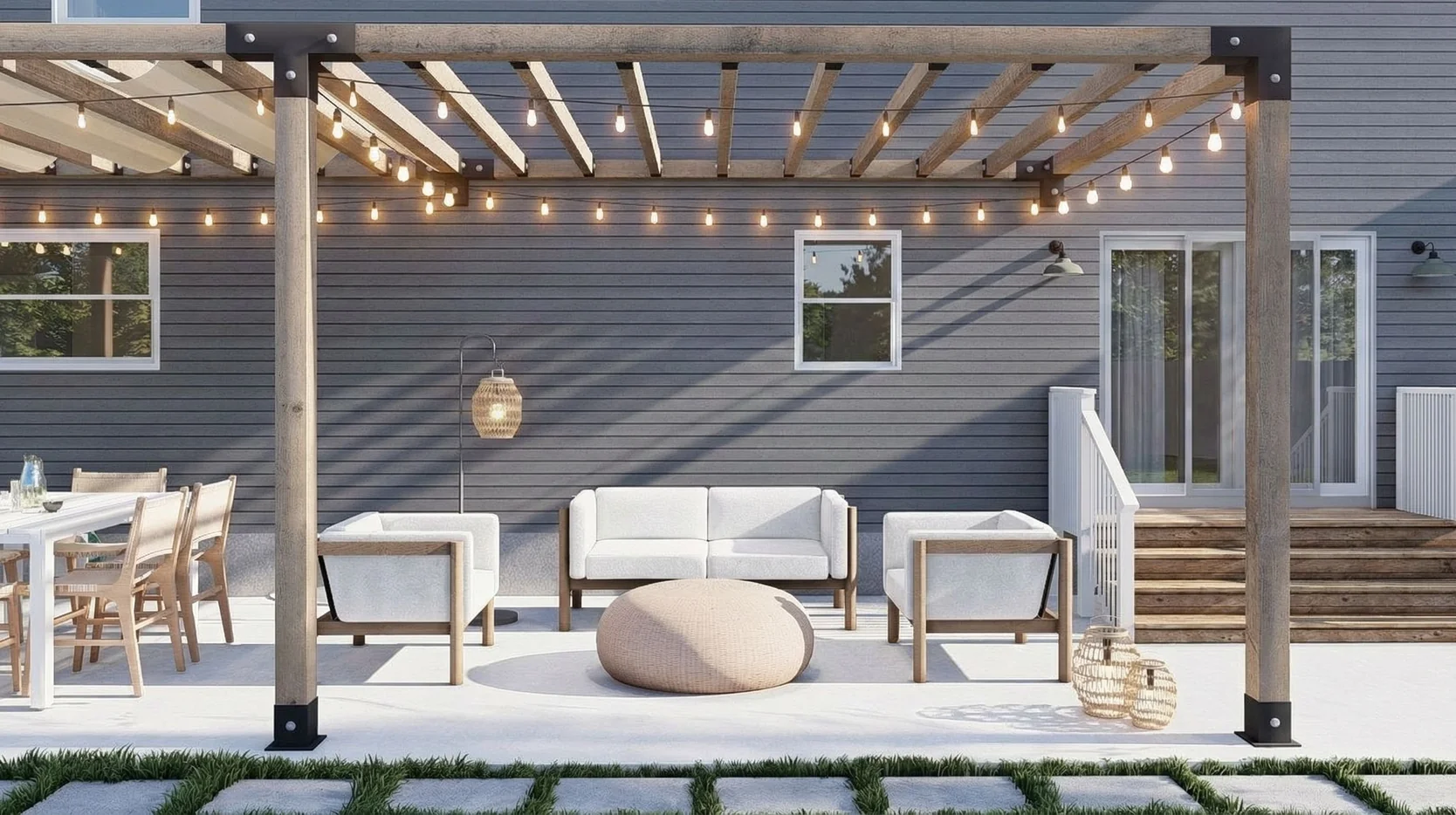
Landscape contractors lose bids every week — not because their work is inferior, but because they cannot show clients what the finished project will look like. When a competing firm walks into the same sales meeting with photorealistic 3D renders of the exact space, the decision is already made before pricing is discussed.
This article covers why 3D visualization for landscape contractors directly affects bid win rates, what clients actually respond to, and how contractors are closing larger projects without adding a single person to their team.
Quick Summary
Landscape contractors who present photorealistic 3D renders win more bids because clients make faster, more confident decisions when they can see the finished result before work begins. Visualization removes hesitation, justifies higher pricing, and positions the contractor in a different category from competitors who show nothing. Contractors partnering with an integrated design team can offer this capability from day one — without hiring in-house designers.
Yes — and the mechanism is straightforward. Clients cannot buy what they cannot picture. A landscape project is an investment in something that does not yet exist, and most homeowners struggle to mentally translate a verbal description or a 2D sketch into a finished outdoor space. Doubt stalls decisions, and stalled decisions become lost projects.
When a contractor presents a photorealistic render of the client's actual property — showing the exact pergola, the patio material, the lighting configuration — the emotional response shifts. The client is no longer evaluating a proposal. They are reacting to something they already want. That shift compresses the sales cycle from multiple follow-up meetings to a single presentation.
Contractors who have integrated 3D visualization into their sales process report that clients commit faster and with fewer objections on price. The render does not just sell the design — it sells the contractor's professionalism, preparation, and confidence in the project outcome.
The decision to approve a landscaping project — often a $30,000 to $150,000+ investment — is not purely logical. It is emotional. A client picturing their family using an outdoor kitchen or gathering under a pergola with string lights is a client who is already sold. The remaining discussion is about logistics, not whether to proceed.
This is what photorealistic 3D renders accomplish that no other sales tool can match. A 360° VR visualization takes it further — the client can actually stand inside the proposed space, rotate the view, and experience the scale and light before a single shovel enters the ground. The hesitation that normally requires weeks of back-and-forth to overcome is resolved in one meeting.
The contractors winning the largest outdoor projects in competitive markets are not necessarily the most experienced or the most affordable. They are the ones who show up with the best visuals.
Professional visualization directly supports premium pricing — this is one of the clearest business cases for adopting it. A contractor who can show a client exactly what they are getting removes the perceived risk of the purchase. When risk is removed, price sensitivity decreases.
Consider two contractors bidding on the same backyard renovation:
Contractor B is not competing in the same category, regardless of whether the final price is 15–20% higher. The render communicates a level of professionalism and certainty that the sketch cannot. The client perceives higher value — because higher value has been delivered in the presentation itself.
This is why landscape contractors working with an integrated design team can charge more for the same physical work. The design and visualization component elevates the entire service offering.
An integrated design team means a contractor has access to full 3D visualization capacity — renders, walkthroughs, VR — without hiring a single in-house designer. The design capability exists from day one of the partnership, and every project submission receives professional-quality output that the contractor uses directly in client presentations.
This is the model Yelicca Design operates on. Landscape contractors, hardscape firms, and general contractors submit projects through a straightforward process:
The contractor never needs to manage a freelance designer, negotiate file formats, or explain what a final render should look like. The design team handles the output. The contractor handles the client relationship and the close.
3D visualization delivers the clearest return on larger projects — typically those where the visual complexity or investment level makes client hesitation a real factor. For a straightforward small project with a repeat client, a full render may be more than the situation requires. For any project where the client needs to approve a design they have not seen executed before, visualization directly reduces the risk of a lost bid.
The practical threshold is where the project is large enough, or unfamiliar enough to the client, that they need to see the result to feel confident committing. Most landscape contractors find that projects above a certain budget threshold — or any project involving custom features like pergolas, outdoor kitchens, retaining walls, or complex lighting — benefit significantly from presenting renders.
Beyond closing individual projects, contractors using 3D visualization consistently generate stronger marketing content. Every render becomes an asset for the contractor's website, social media, and SEO-optimized blog posts — building a portfolio that attracts better clients over time.
Yes — landscape contractors who present photorealistic renders close more projects because clients can see the finished result before work begins. This reduces hesitation and often compresses a multi-meeting sales process into a single presentation.
When a client can see exactly what they are getting — through a photorealistic render or 360° walkthrough — the perceived risk of the purchase drops. Lower perceived risk means lower price sensitivity. Contractors presenting professional visualizations operate in a different category from those presenting sketches or nothing at all, and can price accordingly.
Projects with custom features — pergolas, outdoor kitchens, hardscape with complex patterns, multi-zone lighting, water features — benefit most, as these are the hardest for clients to visualize from a description alone. Any project where visual complexity or budget size creates client hesitation is a strong candidate for 3D visualization.
No. Contractors who partner with an integrated design team like Yelicca Design have access to 3D photorealistic renders, walkthrough videos, and 360° VR visualizations without adding anyone to their payroll. The entire design output is handled externally and delivered through a project management platform.
Turnaround depends on project complexity and the specific partnership arrangement. Timelines are discussed during the discovery call at yelicca.com, where the contractor can review what to expect for their typical project volume and type.
Yes — every render produced is a permanent marketing asset. Contractors use project visuals for their website portfolio, social media content, and SEO-optimized blog posts that build long-term online presence and attract future clients.
The gap between contractors who consistently win bids and those who lose on presentation is increasingly a visualization gap. Clients are choosing contractors who show them the result — not those who describe it. 3D visualization for landscape contractors is not a luxury add-on; it is the sales tool that determines which firm gets the call back.
If you are a landscape contractor ready to present at a level that closes larger projects, a discovery call with Yelicca Design is the place to start. Visit yelicca.com to schedule one — no commitment required.
The fastest architectural design team, delivering creativity at the speed of innovation 🚀
.jpg)
.jpeg)